Shanghai policemen and their novels

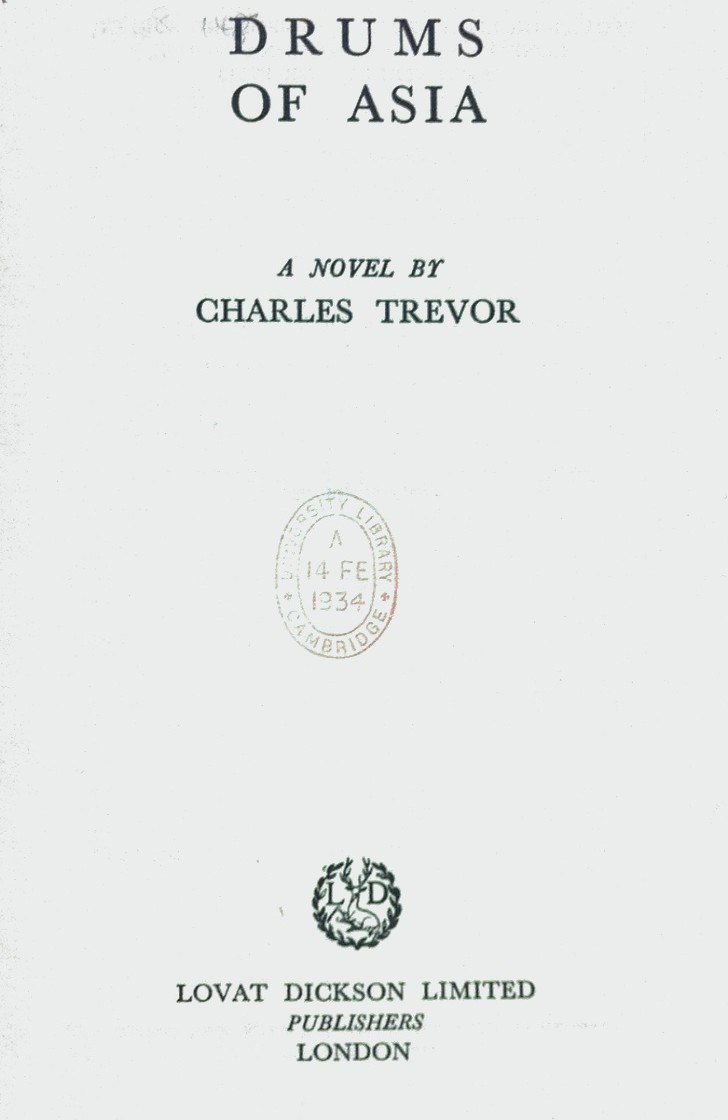
Drums of AsiaA recent post on the blog Sikhs in Shanghai drew attention to a little known fact: Captain Edward Ivo Medhurst Barrett, C.I.E., Commissioner of the Shanghai Municipal Police, well known Hampshire cricketer, and the target for a bolt of lightning which struck Aldeburgh golf course in summer 1932, had also been a novelist.  Barrett was fired for reasons that were never quite made clear in 1929, and was to die in 1950 when he was knocked off his bicycle. The novel, a secret agent thriller, Drums of Asia, was published by Lovat Dickson in 1934, the author being given as Charles Trevor.

Barrrett had been recruited from the Malay States Guides to head the SMP’s Sikh Branch in 1907. Various records show him to be an important collaborator with Government of India intelligence activities in Shanghai aimed at countering Indian nationalist activities there. To find that he had written a novel which commences with German diplomats in Shanghai plotting to entice some Indian activists to organise a plot against the British in the pre-era was an enticing thought. ‘Herr Von Truebb-Blaich, German Consul-General in Shanghai was deep in thought’ it begins, as all such thrillers should. From the Consulate-General’s views of the Astor House Hotel and the ‘Whangpoo’ river, the plot ranges across the globe and fetches up with a finale in a barely disguised Afghanistan where it all unravels and the British Secret Service triumphs, predictably. What unexpected light, though, might it shed on Barrett’s role in Shanghai? How much was this a roman à clef? I had long wondered if Barrett was not in fact an intelligence agent of some sort, and perhaps this might shed light on that.

A file in the India Office Records noticed by Sikhs in Shanghai’s blogger promised some answers: entitled “Drums of Asia by Captain E I M Barrett alias Charlie Trevor: India Office correspondence with publishers on suggested changes prior to publication” (IOR/L/PJ/12/469, File 657/33), it details attempts by the India Office in London, liaising with MI5, and the Government of India, to thwart the book’s publication, or, as that was deemed impossible, to ‘shape’ the text. After all, one official notes, surely the India Office could not allow it to be alleged that British Secret Service agents operated under cover in foreign countries, could it? Well, another — perhaps more worldly colleague — remarked, it would not exactly be an entirely new fictional scenario. As you can see, Captain Barrett is identified as the author in the catalogue, and the file does have some interesting comments about him. He had, noted one man, ‘an ‘intimate knowledge of Indian political movements and individuals connected therewith’, and even though he was ‘very well known as a keen officer who did much for the Government of India in Shanghai’,  he was also ‘impetuous and indiscreet’.

Alarms bells rang; the drums of Whitehall were beaten: memos were exchanged. New Delhi was contacted; MI5 was called on. A lengthy list was drawn up of troublesome passages and characterisations in the manuscript. Even though the nationalists who were named as plotters were now dead, officials worried that the characterisations would ‘give much offence in nationalist circles in India’. It could also prove difficult for relations with Afghanistan. In fact, publisher and author were actually to ‘behave in the most wonderfully accommodating manner’. The publisher, Lovat Dickson had brought the issue to the attention of officials himself, calling on them in early July 1933, pointing out that Barrett had supplied the facts, while the book had then been written up by a professional writer, by the name of Broadbridge. Much of the material was actually in the public domain, Dickson later argued, but he and Barrett proved more than happy to change plot details, names and locales, and generally defuse the book’s more worrisome factual elements.

Early memos and notes in the file show officials trying to work out who Barrett was, and how much he might really know. Someone clearly managed to find an old China hand who could oblige, and a month after the file was opened a note on Barrett was entered into the file, indicating also that he left the Shanghai police in those somewhat unclear circumstances and that he was now living in Aldeburgh. On 25 August, Dixon and Barrett called by arrangement on Sir Malcolm Seton, Deputy Under Secretary of State, to clarify how things stood. There must have been a perplexing phase in the discussion, for Barrett stated that he had never been in Shanghai in his life, and that his ‘only Eastern experience’ had been service with the West Kent Regiment on India’s North West frontier during the First World War.

Indeed it proved true: this was and has been a wild goose chase. India Office worries about security leaks and offending nationalist sentiment had been heightened by the belief that one of their own, with ‘intimate‘ knowledge of Government of India intelligence activities, was supplying the facts on which the ghost writer was preparing his text. Those of us interested in the colonial and anti-colonial politics of Shanghai had been bemused and pleased to find a prominent figure in that world writing what was presented as a lightly fictionalised account of events and personalities concerned. But the India Office cataloguers had finalised their summary of the file’s contents without getting to the bottom of its convoluted narrative. They had, we had, the wrong Barrett.

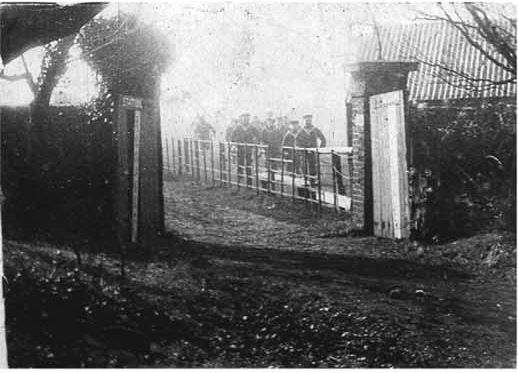
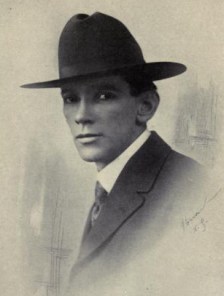
So we are left with Barrett the cricketer (that’s him, 3rd from left in this photograph on Sikhs in Shanghai) , rugby player, Sikh branch commander and police chief, and golfer, but not Captain Barrett, C.I.E., the novelist. However, we are also left with a previously unnoticed 1930s thriller partly set in Shanghai, and an interesting account in the file of the engagement of the British intelligence establishment and popular culture. But never fear: all is not in fact lost — that is, for those of us looking for novels written by Shanghai’s police commanders. Captain Alan Maxwell Boisragon, who held the post of Captain Superintendent in 1901 to 1906 obliges instead: his book for boys, Jack Scarlett: Sandhurst Cadet, was published in 1915. Was the War Office warned, we wonder?
Shanghai Amateur Circus

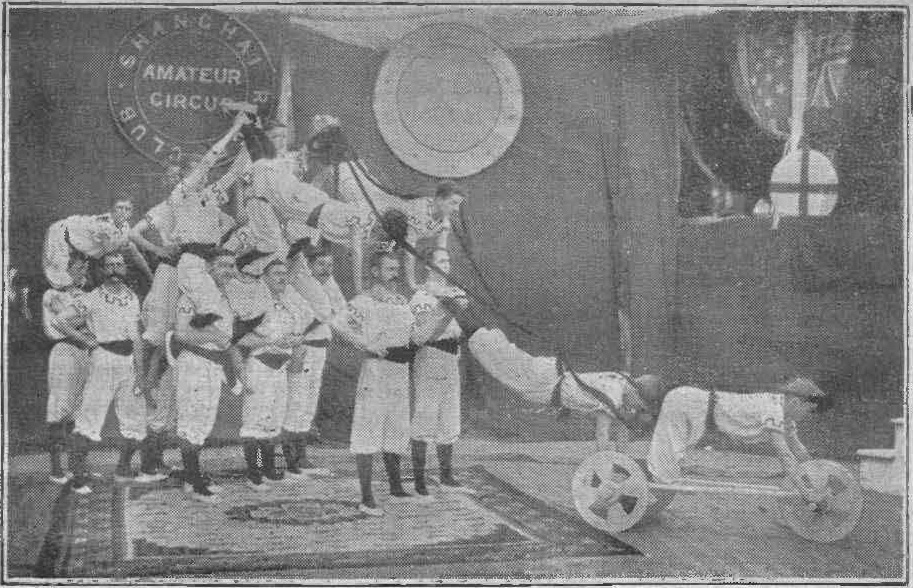
Human pyramid, SACHere are Shanghailanders at play, in the third of the Shanghai Race Club Amateur Circus events, in 1901, a year after the Boxer War, while foreign troops still occupied parts of north China, and were stationed at Shanghai. The first two circuses were held in August 1894 and 1895, a hot and steamy time of year for the foreign community to be masquerading as Sophie Skylark, Tottie Chuckerout and Professor Nankin Roady (to select a few from the programmes). The leading light was British merchant Frank Maitland (‘Frankini’), sportsman, sometime Master of the Shanghai Paper Hunt Club, Race Club Steward, founder of the Shanghai Society for the Prevention of Cruely to Animals, proprietor of the newspaper Sport and Gossip, and then of the Shanghai Times.

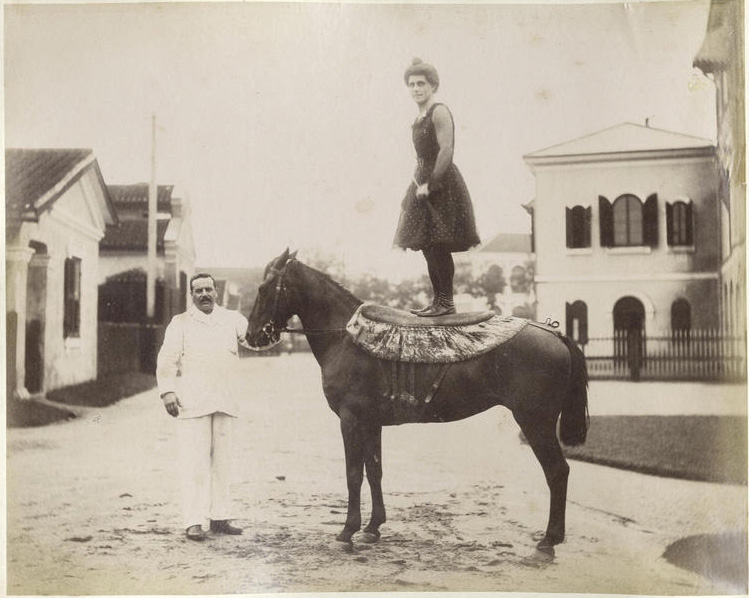
It was, as far as I can see, an entirely masculine enterprise, originating in a ‘circusette’ put on one sultry Wednesday evening in June 1893 in the Race Club Grand Stand. A lavishly illustrated souvenir of the 1901 performances surfaces at auctions, and sells quite handsomely. Amongst its photographs is this pearl: Tottie Longsocks — who ‘wins all hearts’.

tottie longsocks

Dagu Forts, 1859: First round to the Qing

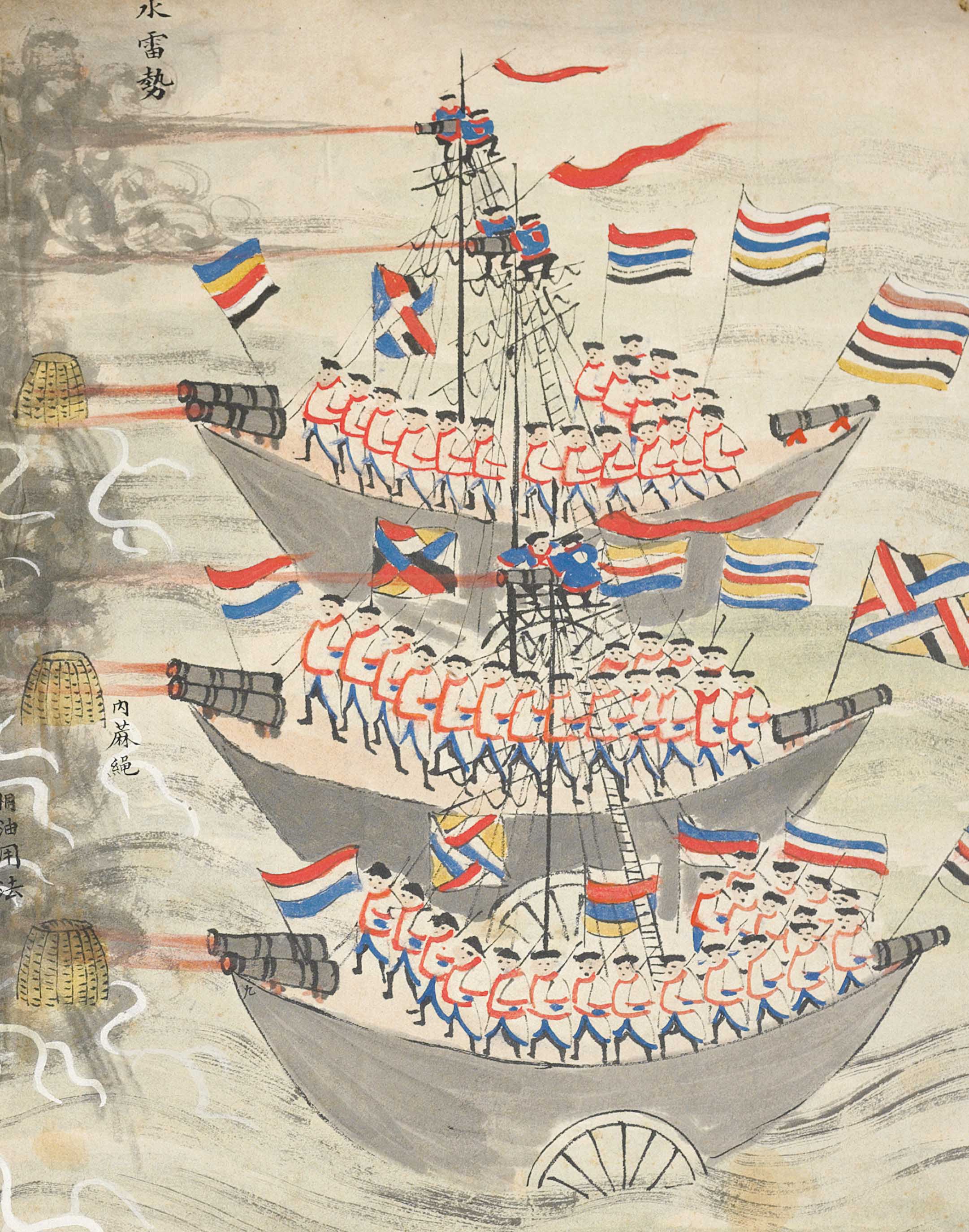
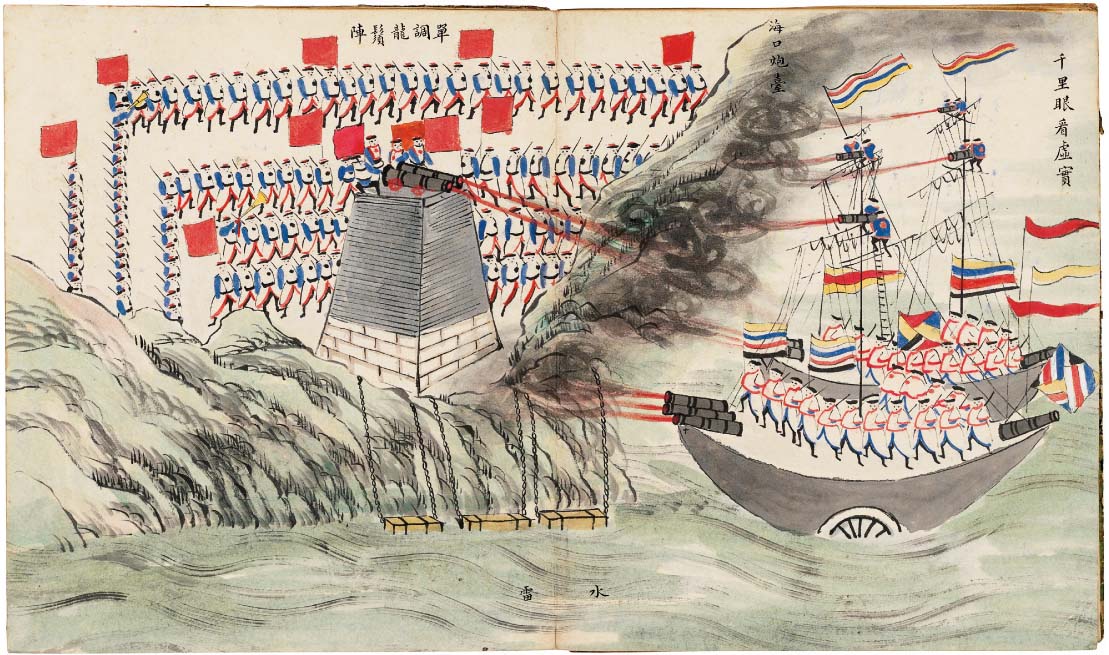
CKS1185_SaleCatp113An upcoming Christie’s sale in London, of the Hanshan Tang Reserve Collection, includes (lot no. 96), a gorgeously illustrated copy of an album of handpainted scenes of battles in the Second Opium, or Arrow, War. This is described on p.63 of the catalogue, from which the illustrations reproduced here are taken. As it was completed before the Anglo-French assualt on north China in the autumn of 1860, it concludes on a triumphal note with the allied defeat at the Dagu Forts on 25 June 1859. Well it might, for this was a comprehensive victory for the Qing, and a complete disaster for the British forces.

CKS1185_SaleCatp63The British were attempting to force their way to Beijing to secure ratification of the 1858 Treaty of Tianjin, and thought the forts, which guarded the entrance to the Beihe, would be a pushover, not least as the forts had been captured a year earlier without a struggle. Then, the garrisons had simply fled. In the interim, however, the defenders had been improving their discipline, their weaponry, their defences, and their artillery targetting. The progress made was revealed, with considerable effect on 25 June.  So confident was the British belief in Qing incompetence and cowardice, however, and so hysterical was the response to the drubbing received, that the only explanation many Britons accepted was that the Russians were behind it all, and must have equipped and trained the Chinese forces, if not helped out in the fighting.

Four hundred Bitish soldiers and sailors were killed, many cut down as they waded across mudflats towards the forts in a frontal assualt, and tried to negotiate pallisades. Four ships were lost. The British retreated from north China. Qing officials who opposed compromise gained the upper hand in discussions about what to do about the foreigners. Everybody settled down to coninue the war.

Felice Beato, Scene

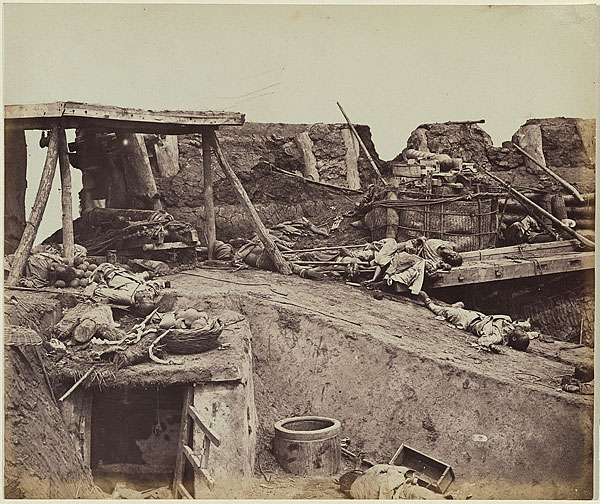
Felice Beato, Scene inside the Dagu forts, August 1860

The Dagu forts are best known, visually, through Felice Beato’s war photography. That might serve to counterpoint the colourful images of Qing victory, for unfortunately for the Manchus, and the garrisons at Dagu, the British and French came back in August 1860, and they took the forts from the landward side. Then they marched on Beijing. Behind them they left the death and devastation caused by their more advanced weaponry, including the new Armstrong Guns that they were testing in action. Ahead of them lay the Yuanmingyuan – the Old Summer Palace. The destruction of the complex later that year by the British was one of the greatest acts of cultural vandalism of the nineteenth century. Partly driving that act, aside from the sheer difficulty of the fight in 1860, and the killing and maltreatment of allied prisoners, was a desire for revenge, not least for the bitter defeat of June 1859.

The Boxers, in Hove

The Boxer uprising of 1900 was the indirect prompt for a landmark moment in the history of cinema. British director James Wiliamson took savvy advantage of the feverish news coverage of events in north China, and assembled a team of actors (including his daughter Florence) at a house in Hove, near Brighton, and made ‘Attack on a China Mission’. The four-minute film was first shown ‘with appropriate music’ — what ever that might have been — at Hove Town Hall on 17 November 1900, and includes the first reverse angle cut yet identified by film historians. Williamson’s film jumps from its view of the ‘mission station’ under attack, to the reverse view: the arrival of the rescuers, a party of British marines, a mounted officer in the rear, who line up in fours and fire directly into the camera, and into the Boxers. For that brief moment a British audience might be said to have shared the same view of British military might as the people of north China.

The marines are coming: Still from scene 3, 'Attack on a China Mission' (1900).

British marines advance over the north China plain …: Still from scene 3, ‘Attack on a China Mission’ (1900).

I wrote about ‘Attack on a China Mission’ in chapter 11 of The Scramble for China. You can now view some of the surviving footage here on Youtube, or here (46 minutes in) presented in the context of other work of the time. If you have access you can also watch it on the British Film Institute site (the supporting material is open access), and there is an academic piece about the technical innovation involved here. The 2006 BBC/BFI documentary ‘Silent Britain’ includes footage missing from the version online linked to above, notably the cut back to the arriving rescuers, and their volleys into the camera.

The Shanghai Volunteer Corps

SVCLOGO2One hundred and seventy years ago this week, the North China Herald reported on a series of consular and public meetings which had led to the creation of what was originally called the British local Volunteer Corps, and in time became officially know as the Shanghai Volunteer Corps. Formed after the seizure of the walled city of Shanghai by a rebel ‘Small Sword Society’, it saw action the following year in the 2 April ‘Battle of Muddy Flat’. This was a successful, if incompetent affair which drove away Qing government forces who were besieging the rebels, but who were camped too close to the foreign settlements, thereby drawing fire onto foreign property. Most of the handful of SVC dead were probably killed by ‘friendly fire’.

Quiescent thereafter until 1870, a revived SVC came under the control of the Shanghai Municipal Council, and in time became a vital component in foreign military defence schemes, and in internal security. A servig British officer was seconded to lead the Corps. Different foreign communities served in national or other companies (American, German, Jewish, the Customs, Philippine etc); the Shanghai Light House deemed itself the socially most prestigious; the Shanghai Scottish probably had most fun in the Mess; and the Chinese Company was formally the most efficient: they shot well and true.

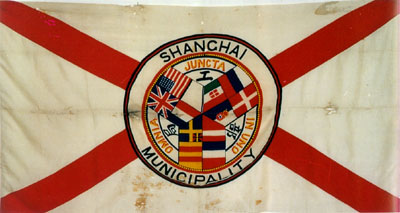
t-flagIn 1927 a paid Russian detachment was created from refugee White Russian soldiers, becoming in 1932 the Russian Regiment. In 1941 this was transferred to the Shanghai Municipal Police as the Russian Auxiliary Detachment. The Corps was abolished in early 1942 after the takeover of the international settlement by Japanese troops. In 1954 a gala dinner at the Royal Hong Kong Yacht Club commemorated the centenary of the ‘Battle of Muddy Flat’ with fillet steak, wine and song.

At times a very significant proporton of young foreign businessmen served in the volunteers. It can not have helped the way many of them understood the nature of the foreign presence in China, let alone the way they were perceived by the Shanghainese who regularly saw parades of armed foreign traders marching down the Nanjing road.

Narrow maxims of antiquity: who owned my books part 2, Mayers, The Chinese Government

Mayers, The Chinese Government, 3rd edition, (1897)

Mayers, The Chinese Government, 3rd edition, (1897)

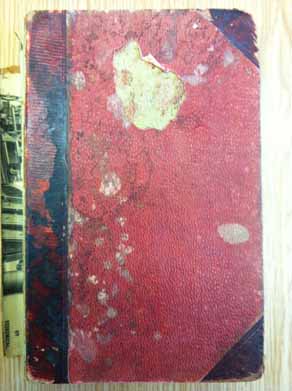
This is a battered survivor. I acquired this much-annotated volume from the family of a retired British consular officer, J.F. Ford. Someone, I think Ford, has copied out from p.125 the phrase I use here in the blog title: ‘Narrow maxims of antiquity!’, turning it, with that exclamation mark, back on its author, F. M. Mayers, as a reflection on a particular vein of thought about Chinese culture.

Joe Ford hardly shared that view. He joined the consular service in the 1930s, and was a Vice-Consul in Shanghai when Maurice Tinkler was killed in 1939. As I recount in Empire Made Me, Joe was despatched across the Huangpu river to Pudong, where Tinkler was held in the local headquarters of the Naval Landing party after after his altercation with  Japanese marines in the China Printing and Finishing Company mill. In fact, Mr Ford can be seen in the grainy newspaper clipping on p. 285, peering at bullets recovered from Tinkler’s gun. Tinkler was at that stage slowly dying. Ford left without being able to persuade the Japanese to release Tinkler, and it was only late that night that he was transferred, too late, to a hospital in the international settlement.

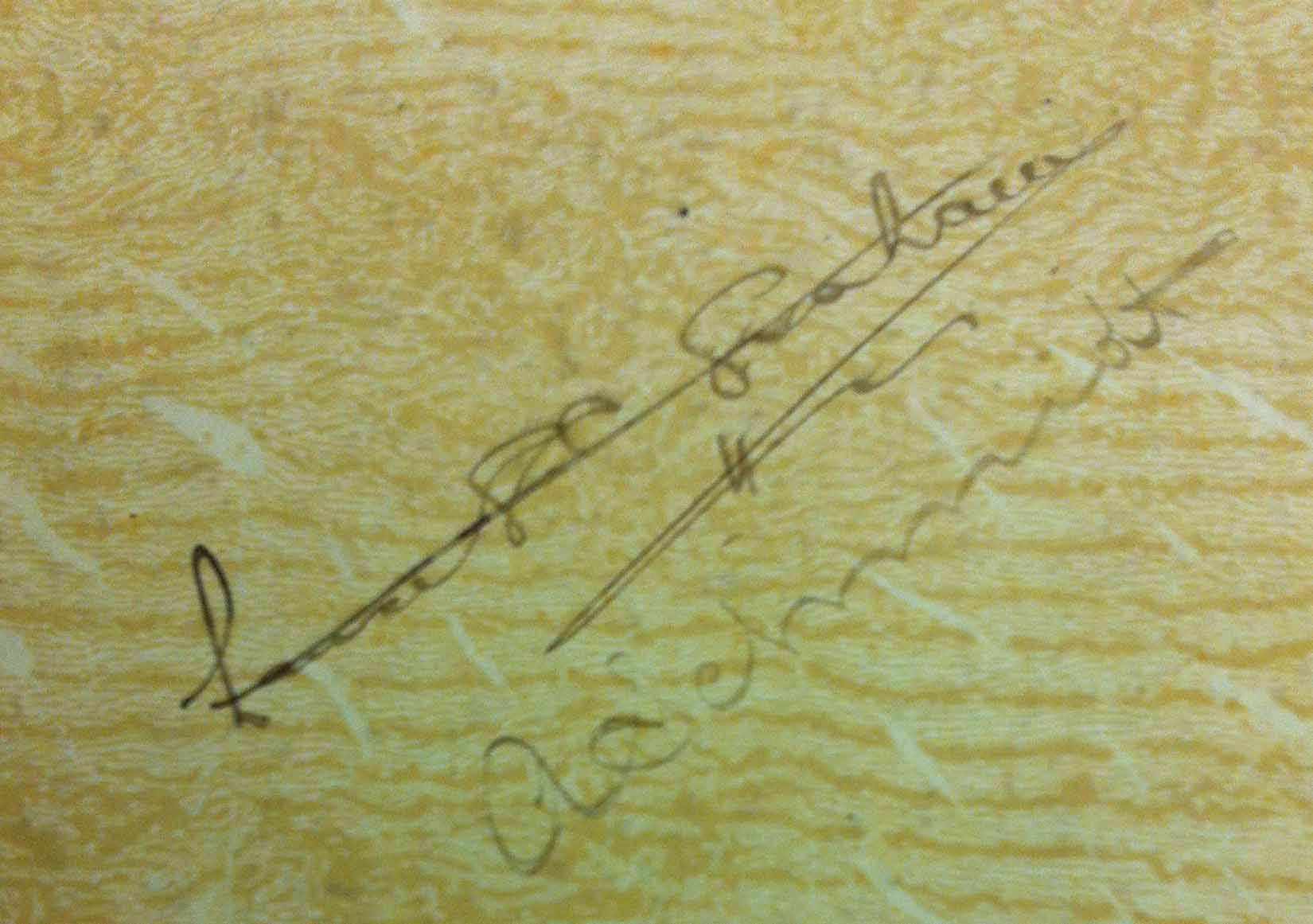
Ford was at least the third owner of this copy of William Fredeick Mayer’s The Chinese Government: A Manual of Chinese Titles, categorically arranged and explained, first published in 1877. This was a copy of G.M.H. Playfair’s revised edition, published in Shanghai by Kelly & Walsh in 1897. While Ford had not inscribed his name in it, ‘L.G.C. Graham’ had, and so too had an ‘A. Schmidt’.

Mayers signatures Lance Gerald Cloete Graham was a ‘student interpreter’, a consular language trainee, who is not listed in P.D. Coates’s comprehensive survey, The China Consuls, but who is pictured in this photograph, dated 1900, of the consular student interpreters at the British Legation in Peking (second from left in the middle row), and in this one, with pony, in 1902. L.G.C. Graham was one of the few men transferred from the China consular service into the wider general service, leaving China in 1904. By 1906, however, he was at the British Legation in Tehran; in 1908 he was Acting Consul-General in Algeria. Perhaps his language studies had not proved that fruitful, although his son entered the China consular service, and later served in the 1950s as British ambassador to Libya.

As likely as not the A. Schmidt who crossed out Graham’s name was a German member of the Imperial Maritime Customs. Schmidt had joined as a ‘Watcher’ in June 1882, and was one of a number of men transferred from the ‘Outdoor’ staff into the ‘Indoor’ staff by July 1896. He rose to be Deputy Commisisoner at Shanghai before his dismissal, with all other German and Austrian staff, in 1917. Schmidt woudl have needed Mayers’s guide to the structure of Qing government, its system of ranks and appointments etc. Schmidt was married to an Englishwoman, and surfaces in the North China Herald in connection with attempts to get sequestered funds released after 1918. They seem to have lived in Niuzhuang (Newchwang, Yingko) after 1917 at least, where Mrs Schmidt, sister of a British trader, William J. Lister, died on 17 June 1926. So the book seems to represent also the pre-war closeness of Anglo-German ties in China, an intimte relationship largely obscured by the First World War.

Perhaps Joe Ford acquired the book when he too began his language studies in Peking in the 1930s, but it would have been of historical interest only in the republic. Like many consuls and customs men, however, Ford also developed a scholarly interest in China. In later life he worked with the late Professor Ying-wan Zheng  on a project to translate into English the journal of Feng Ling, a ‘travelling naval observer’ sent to Europe in 1894-7. Feng spent over a year in Britain, and it was his British diary that the collaborators worked on. Ford came across the diary by chance on a road-side bookstall in Chongqing in 1944. It had been published in 1904 and then reprinted by Feng’s son in 1929.

Mayers died long before Feng Ling set sail, falling fatally ill at Shanghai in 1878, en route from Peking where he was Chinese Secretary, to take leave in Britain. He was an ‘excellent Chinese scholar, a fluent and polished writer, and an indefatigable worker’, in the words of the North China Herald, part of whose legacy was this training manual for newcomers to the Chinese language and the Qing political system, passed on from consul to customs man, and back to consul, and perhaps held and used by others in between, a book which has clearly done service in its time.

Marvellous Soup: Who owned my books, part 1. Goodrich, Pocket Dictionary (1933)

My books have travelled with me over the years, from secondhand shops the world over, through London and here to Bristol. But many of them had journeyed far before then, and had passed through other libraries. An occasional series of posts will explore the journeys of some of these.

In 1991 I helped mediate the donation to the Archives at the School of Oriental and African Studies of the Scott family papers. The Revd Charles Perry Scott (1872-1927) was a founder of the Church of England North China Mission, based in Shandong province. He was the first Bishop of Shantung. The material included publications of the mainly Shandong-based mission, correspondence of the Scott family and others in the society, and also letters and diaries of Maurice Woodford Scott (1902-83) from his years working in China for Butterfield & Swire. Scott had been born in Peking, and had been sent to school in England before studying at Oxford university, and joining Swires as one of a new breed of university graduates the firm started to recruit in the early 1930s.

Chauncey Goodrich, A Pocket Dictionary and Pekingese Syllabary (first published 1891)

Chauncey Goodrich, A Pocket Dictionary and Pekingese Syllabary (first published 1891)

Amongst the items not needed by SOAS library was this 1933 edition of a pocket dictionary, compiled by Revd Dr. Chauncey Goodrich (1836-1925) of the American Congregational Mission (whose grandaughter died just last year). It belonged to Maurice Woodforde Scott, whose initials are on the inside front cover. Scott would have needed a coat pocket to hold it in, but nonetheless the book has evidently been carried around by him.

It has also been written in. There is little space in the book itself: its printed pages are crammed with entries and columns of characters, but on the inside and front covers and one blank page, we can catch glimpses of Scotts life and travels.

Here is the Revd R.N. Bland’s address: ‘Sheng Kung Hui, Hengchow, Hunan’. An Anglican missionary, Bland was later curate at Camborne in Cornwall. Here is Mr Li’s address at Guangxi University in Guilin. Here is the name of a lacquer manufacturer in Fuzhou. They were perhaps met on trains, or on ships, as Scott travelled around. Someone has written in the name of the Tang dynasty painter Wu Daozi, someone else the note ‘江西省的会馆’ — Jiangxi guildhall — and another wrote a temple name, Fayuan si (as likely as not the temple of that name in Peking). Yet another hand has written 六郎斬子, the title of an opera, with the romanisation next to each character, including the tone mark.

Scott note

Marvellous soup

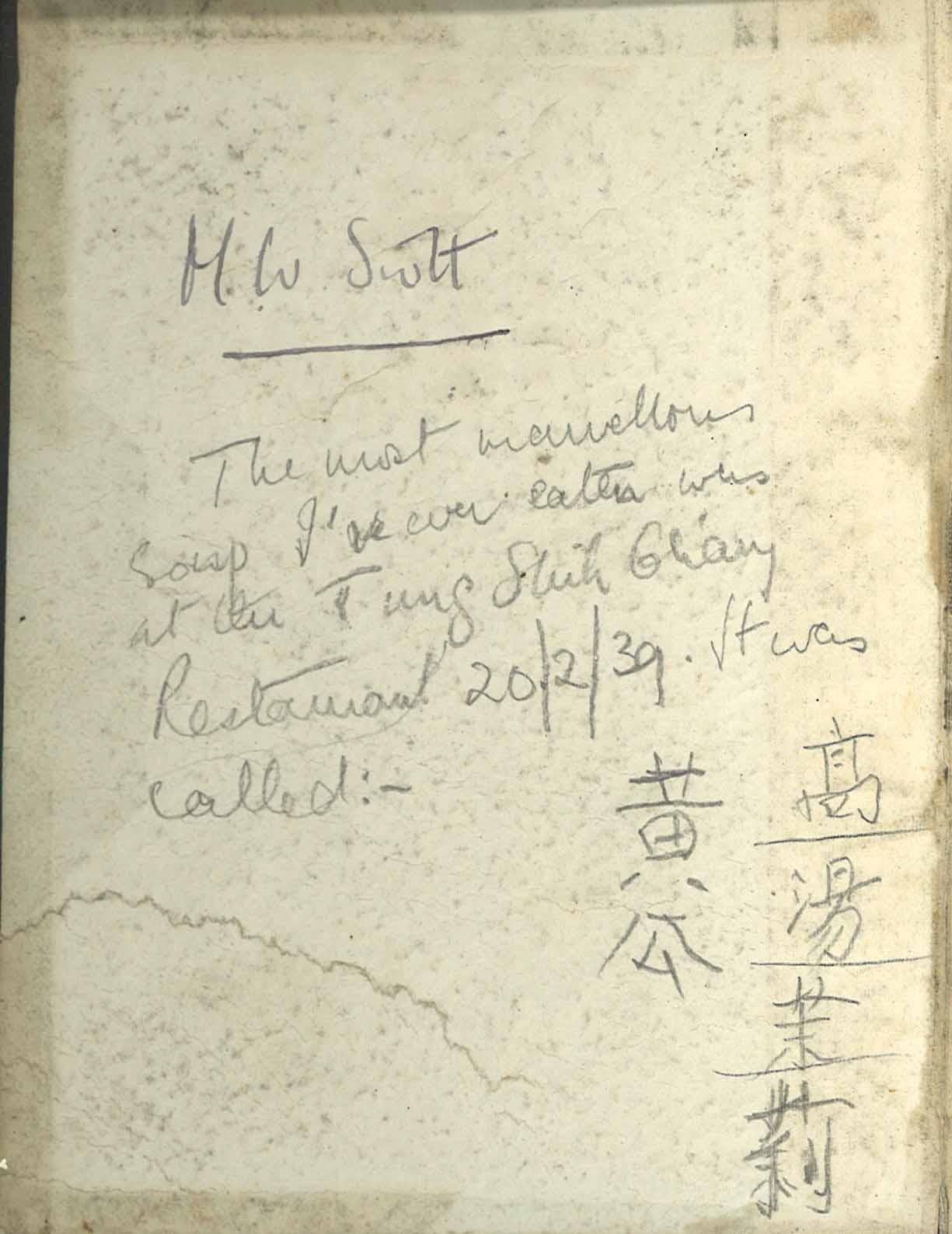
Most marvellous of all is Scott’s own attempt to write out the characters from a menu. ‘The most marvellous soup I’ve ever eaten’, his note reads, ‘was at the Tung Shih Ch’ang Restaurant 20/2/1939. It was called:- 高湯茉莉黄瓜’.

This was Gaotang moli huanggua: a jasmine flavoured cucumber soup, and Scott was probably enjoying a new year’s feast, for this was the second day of the new Chinese year of the rabbit. Where might the restaurant be? Scott served in a variety of postings for Swires, before he left, and later himself took holy orders and served as a clergyman in England. I suspect it was a restaurant in Peking.

Scott’s shaky calligraphy was improved upon perhaps by a Chinese companion or host at the restaurant — for I think we can assume that the note was made at the table, with the taste of the dish still upon his tongue. On the opposite page the same characters are written out again by a fluent hand. The writer, evidently dissatisfied with the final word, 瓜, wrote it out yet again, in firm and very clear strokes.

Clearer soup.

Clearer soup.

There too, on the same page, are a couple of sketches of Chinese faces, presumably also from Scott’s pencil.

So in these few pages is caught a wonderful array of pieces of information that Scott, lacking a notebook, needed to copy down. On the hoof, in a restaurant, on board, waiting perhaps with time on his hands and but a pencil and dictionary to pass the time, Scott jotted things in it, or got others too. It serves as a record of encounters with food and language, people and culture. He notes where to buy lacquer, and perhaps which temple he should visit. The dictionary cost him $3.50. These are fleeting notes. Perhaps he wrote to Revd Bland and Mr Li; perhaps he visited the Fayuan si or the Fuzhou lacquer dealer, most likely not. Most likely he never again tasted Gaotang moli huanggua, ‘the most marvellous soup’, but perhaps in later life he turned the page and memory took him back to the Tung Shih Ch’ang restaurant and the delightful dish that he encountered as part of the new year celebrations on Monday February 20 1939.

Remembering Sir Robert Hart

The post below was originally published on the website of the British Inter-university China Centre, which I direct.

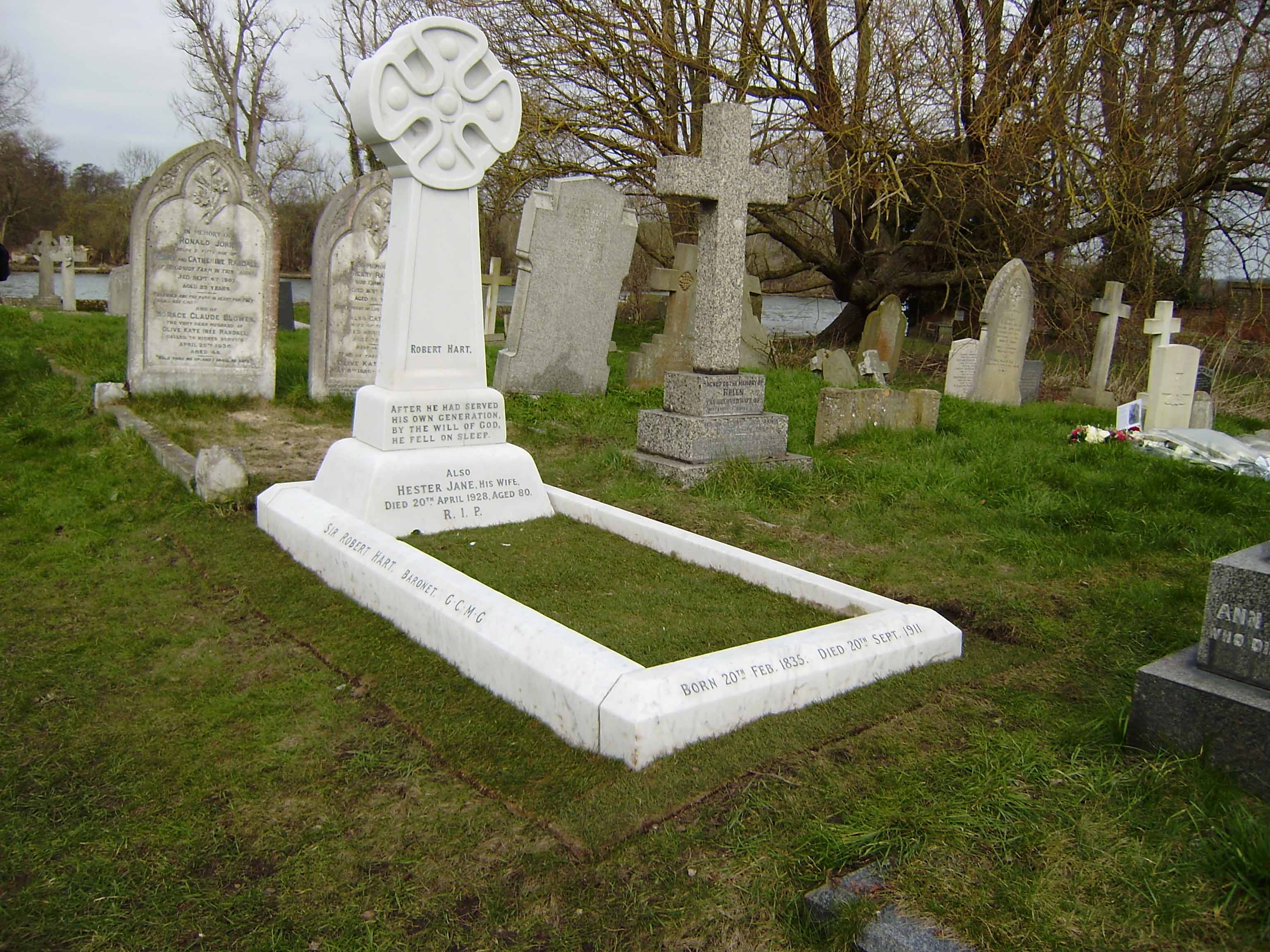
BICC has been collaborating with Dr Weipin Tsai at Royal Holloway University of London, on her imaginative initiative to restore to public view the achievements of Sir Robert Hart, the Ulsterman who served from 1863-1911 as Inspector-General of the Chinese Maritime Customs Service. The first stage of this programme was completed on 22 February, when sixty guests assembled at All Saint’s Church in Bisham, near Marlow in Berkshire, for a ceremony to rededicate the gravestone of Sir Robert and Lady Hester Jane Hart.

hart4

Hart tombstone before restoration, 2012

The tombstone had been in danger of being removed, as it was in a decrepit state, but the team have had it professionally restored. On a freezing cold, but sunny morning, an audience of former diplomats, business figures, Chinese studies academics, several descendents of Customs staff, including descendents of Hart himself, and visitors from China, assembled for a simple rededication ceremony. The grave is but a few yards from the Thames, and there the Reverend Sara Fitzgerald led a service which included addresses on Hart’s spiritual life and motivations from Hans van de Ven, at Cambridge University, and on Hart’s contribution to Anglo-Chinese relations from Robert Bickers.

Sir Robert and Lady Hart's tombstone after restoration, February 2013

Sir Robert and Lady Hart’s tombstone after restoration, February 2013

Wreaths were then laid by Etain Alexander, great grand-daughter of Sir Robert, Deidre Wildy on behalf of his alma mater Queens’ University Belfast, Julie Shipley, Head of the Sir Robert Hart Memorial Primary School in Portadown, Dr Mary Tiffen, in memory of the Carrall family, and Weipin Tsai on behalf of The Royal Philatelic Society London, Taiwan Chapter; Chinese Taipei Philatelic Society; The China Stamp Society, Inc. Taiwan Chapter. (Hart was appointed to manage the new Imperial Chinese Post Office when it was established in 1896).

Waltham St Lawrence Silver Band, in All Saints' Church, Bisham

Waltham St Lawrence Silver Band, in All Saints’ Church, Bisham

In recognition of Hart’s place in the history of the European classical music’s reception in China — he organised and ran the first secular brass band in the country — the local Waltham St Lawrence Silver Band played a selection of pieces. These included some that are known to have been included in the programmes played by Hart’s own band in the gardens of his residence in Peking.

The ceremony was followed by a reception and presentations about Hart and his legacies, including his archive at Queens’ University Belfast Special Collections, and discussion of how the rich private archives of the British presence in China, not least its photographic records, can help furnish unique materials for understanding China’s modern history, its heritage, and social life and customs.

Hart joined the Customs in 1859, and 2013 marks the 150th anniversary of his formal appointment to the Inspector-Generalship. He was a Chinese civil servant, and never let the foreign nationals on his own staff forget this point, and he worked consistently to try and fashion structures and practices that would reduce the potential for tension between China and the foreign powers. He did not always succeed, but he undoubtedly had a significant impact on the course of events. Hart’s reputation has varied over the years. In Anglophone historical writing in the 1950s-60s he was presented as fairly central to any understanding of China’s interaction with foreign power, but thereafter new scholarly trends explored different fields and approaches and he largely fell out of sight. In China, until relatively recently, he was viewed simply as an agent of foreign, principally British, imperialism.

Attitudes in China today are more nuanced, and there has been a revival of scholarship internationally into the rich and varied history of the activities of Hart and his service. This event was part of a wider initiative, which will include a film, which aims to place Hart back into broader debates about British-Chinese relations, their history, contemporary features and their future. In particular, those state to state relations are at heart also relations between people, British and Chinese. In Hart, and the 22,000 foreign and Chinese staff of the Customs, and in the legacies of those careersdown to today, we have a rich field in which to explore how people shaped such abstractions as ‘Anglo-Chinese relations’.

The booklet accompany this commemorative event, Between Two Worlds: Commorating Sir Robert Hart, compiled by Weipin Tsai, can be found on the History of the Chinese Maritime Customs Service project website.

Hugh Hamilton Lindsay

A dominating presence in the opening chapters of The Scramble for China is Hugh Hamilton Lindsay (1802–1881), probably the first Briton to visit Shanghai, in 1832 on board the Lord Amherst. It was frustrating to write about a man of whom no images whatsoever appeared to have survived. At a late stage, I was alerted to a watercolour in the Chater Collection of the Hongkong & Shanghai Bank, which seems to show him ‘leaving Canton in a fast-boat’, according to a description written on the painting. It is an atmospheric image, and I used it in the book, but the man shown is fairly indistinct.

Hugh Hamiton LIndsay, painted by George Chinnery, copyright Sir W. Young.

Hugh Hamiton LIndsay, painted by George Chinnery, copyright Sir W. Young.

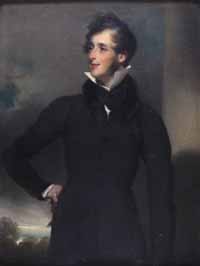
In September 2011 I fleshed out Lindsay’s life and career more fully in a lecture to the Royal Historical Society, now published in the Society’s Transactions. Afterwards, as a result of the publicity, I received an email asking if I would be interested in seeing a portrait of the man, painted by the great India and China coast artist, George Chinnery. Within a few days I was holding this delightful small painting in my office in Bristol.

Lindsay had no children, but the owner was a descendant on his sister’s side. It shows a man perhaps not yet 30, in a romantic style. It fits very well with descriptions of LIndsay in the journal letters of the American Macao resident Harriet, Low, ‘droll’, handsome, ‘always ready, for adventures of any kind’. Lindsay commissioned the famous drawing of Karl Gützlaff in Chinese clothing by Chinnery, which is best known in the form of a print, and it made perfect sense to find that the artist had painted the Scotsman as well.

So there he is, at last: Hugh Hamilton Lindsay, would-be Sinologist, restless traveller, warmonger, Member of Parliament, angry young man, embittered old China hand. He railed successively against the East India Company which employed him until 1832, the Qing empire which thwarted his ambition in China, the British state which did not follow a ‘forward’ enough policy there and, later, he fought with ‘Rajah’ James Brooke over concessions in Borneo. Most of that story was yet to come when George Chinnery captured the spirit of this nonetheless charming adventurer, sometime around 1830, in sleepy Macao.

Tex O’Reilly, Shanghai Policeman

O'ReillyTwo correspondents recently drew my attention to a obscure Shanghai police memoir I had not heard of: Roving and Fighting: Adventures under Four Flags (1918). In this and his later Born to Raise Hell Tex’ O’Reilly, also known as ‘Major’ Edward S. O’Reilly (1880-1946), recounts a mercenary life in Asia and central America at the turn of the nineteenth and twnetieth centuries. In between his military escapades (one of those ‘four flags’ — China’s — employed him for but a few weeks at most) he was a language teacher in Japan, and a policeman in the International settlement at Shanghai.
I have no record of his police service, which in his telling lasted ten months in 1901, but short-serving men leave fewer records, and often do not appear in annually published staff lists. The yarn deals with much of the predictable stuff of salacious exposes and popular fictions of the coast, but also has a ring of truth to some of it. O’Reilly was later a journalist, so knew how to mix the two. Although he delivers as his own experience an account of dealing with the settlement’s Wheelbarrow riots — which actually took place in 1897 — he later names a man who left the police with him to serve as a bodyguard for a local Chinese official, and a man of the same surname did actually leave the Shanghai Municipal Police in 1902. A ‘T.E. Reilly’ sailed out of Shanghai for Nagasaki, as Tex says he did, on 26 February 1902. O’Reilly made his name later in the Mexican revolution and as a journalist, but there seems to be no reason to doubt he was for some short time a Shanghai policeman, despite his reputation as a spinner of tall, tall tales.